A human visitor will wait for your page to load. They’ll scroll past a confusing menu. They’ll squint at a cluttered layout and try to find what they need. They’ll give you a second chance.
An AI agent won’t do any of that.
Agents operate on zero tolerance
When an AI agent visits your site on behalf of a user, it has one job: get the information and move on. It doesn’t browse. It doesn’t explore. It makes a request, evaluates the response, and decides in milliseconds whether your site is worth interacting with.
If your page is slow, the agent times out and tries the next result. If your content is buried inside JavaScript that the agent can’t execute, it sees an empty page and leaves. If there’s no structured data to parse, the agent has to guess what your page is about, and agents don’t like guessing. They move on to a site that makes it easy.
This isn’t a theoretical future. Shopping agents are already comparing prices across retailers. Research agents are compiling reports from multiple sources. Travel agents are checking availability across booking platforms. If your site isn’t in the mix, you’re losing transactions you never knew existed.
The invisible traffic you’re missing
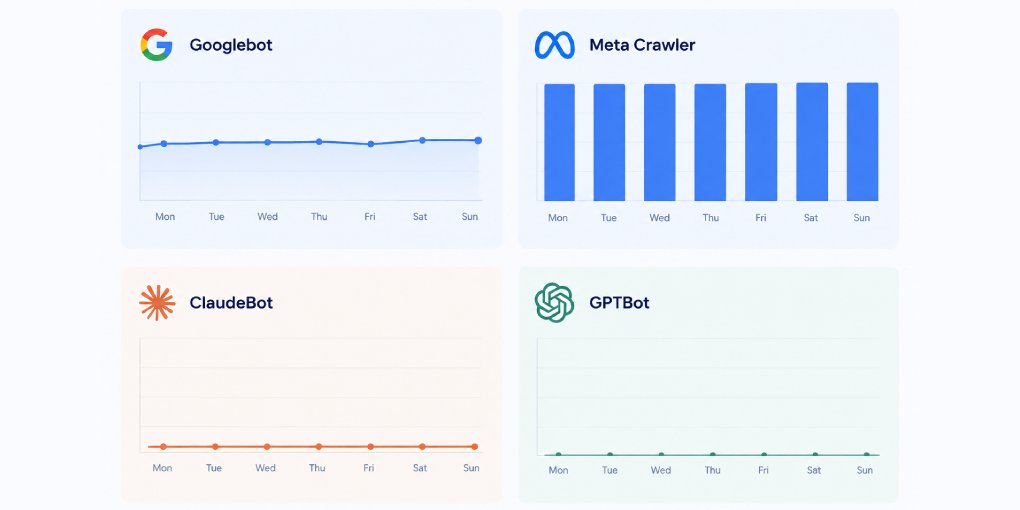
Here’s what makes this different from traditional SEO: you can’t see agent traffic failing. There’s no bounce rate for an agent that never rendered your page. There’s no analytics event for a request that timed out before your JavaScript loaded. There’s no Search Console report showing “agent couldn’t parse your content.”
Agents that skip your site leave no trace. You don’t know they came. You don’t know they left. You only notice the effect months later when your traffic from AI-powered channels is inexplicably flat while competitors are growing.
What agents check before they engage
AI agents evaluate your site through a series of rapid checks. Fail any of them and the agent moves on without trying harder.
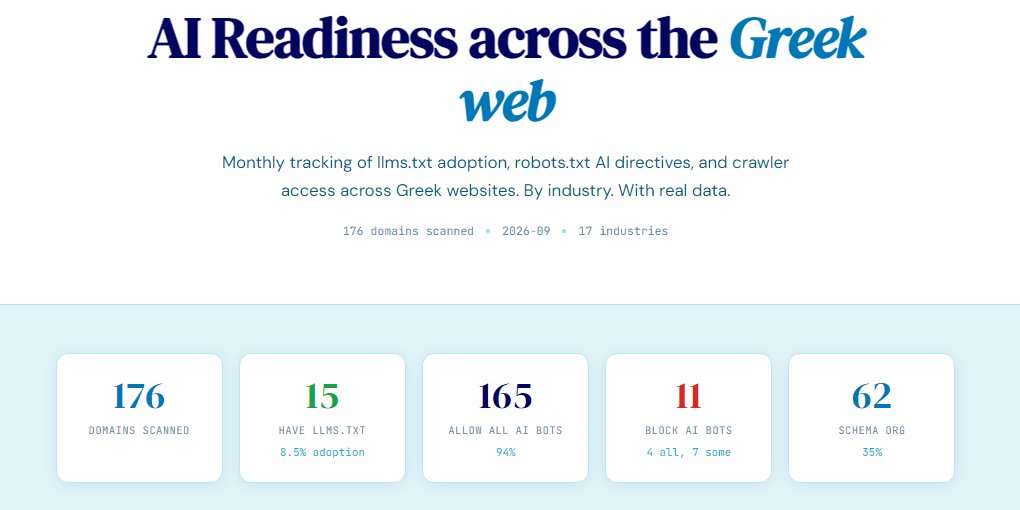
Can I access the content? The agent checks robots.txt first. If AI crawlers are blocked, the interaction ends immediately. No negotiation, no workaround. Your content is simply invisible.
Is there a site manifest? Agents look for discovery files that explain what your site offers. An llms.txt file tells the agent what your site is about. An MCP Server Card at /.well-known/mcp.json tells it what capabilities you expose. An Agent Skills Index at /.well-known/agent-skills/index.json tells it what actions it can perform. Without these files, the agent has to figure everything out by crawling, which is slow and unreliable.
Is the content structured? Agents prefer structured data over raw HTML. JSON-LD schema gives them product information, article metadata, FAQ pairs, and how-to steps in a format they can parse instantly. Sites without structured data force agents to extract information from visual layouts, which is error-prone and slow.
Does the server respond quickly? Agents have strict timeout thresholds. If your server takes more than a few seconds to respond, the agent has already moved on. Performance isn’t a nice-to-have for agent compatibility. It’s a requirement.
Can I get clean content? Some agents send Accept: text/markdown headers, requesting a clean text version of your page instead of HTML. Sites that support markdown content negotiation give agents exactly what they need. Sites that don’t force agents to parse complex HTML, strip navigation, remove ads, and hope the result makes sense.
The compounding disadvantage
Every interaction an agent has with a competitor instead of you reinforces a pattern. AI systems learn which sites are reliable, responsive, and well-structured. Over time, your competitors build a reputation score with these systems while you remain unknown.
This isn’t speculation. It’s how retrieval-augmented generation works. Models prioritize sources they’ve successfully extracted from before. A site that consistently provides clean, structured, fast responses gets prioritized in future queries. A site that agents have never successfully interacted with stays at the bottom of the list.
The gap compounds. Early movers get more agent traffic, which builds more positive signals, which generates more agent traffic. Late movers face an increasingly steep climb.
Check where you stand
Run your site through hey-eye to see your current agent readiness. Beyond the four-pillar AI visibility score, the analyzer includes a dedicated Agent Readiness panel that checks for each discovery file and protocol agents look for: MCP Server Card, Agent Skills Index, WebMCP, Auth.md, Markdown Negotiation, and Link Headers.
Each failed check includes a “Fix with AI” button that generates a step-by-step implementation guide for your specific site. You don’t need to research each standard individually.
The window is now
Most websites today fail the majority of agent readiness checks. That’s your opportunity. The bar is low, the effort is minimal, and the sites that clear it now will be the ones agents learn to trust first.
Your competitors are either reading this same advice or they’re not. Either way, the agents aren’t waiting for anyone to catch up.