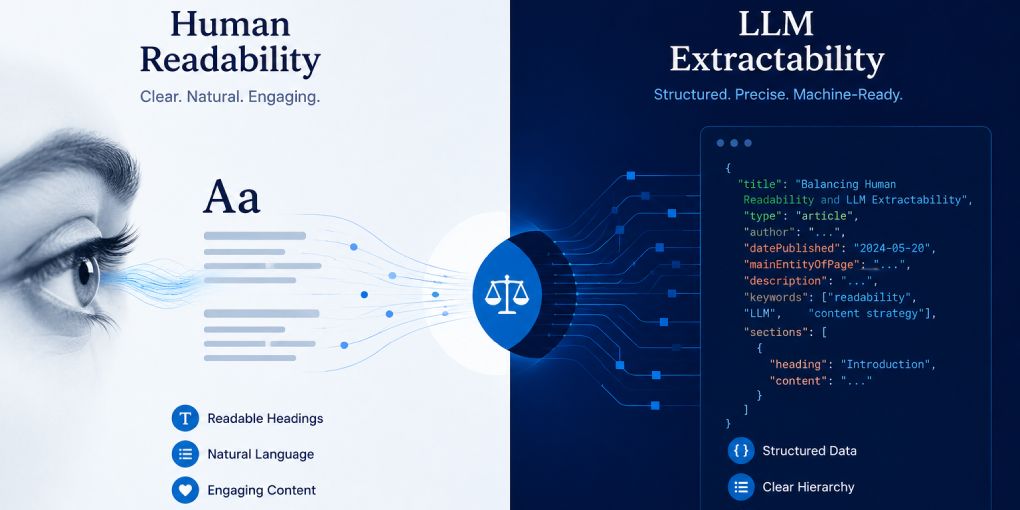
There’s a growing fear that optimizing content for LLMs means making it worse for humans. More schema, more structure, more robotic formatting. The assumption is that AI-friendly content reads like a manual.
That assumption is wrong. The best content for LLMs is also the best content for people. Here’s why.
The false tradeoff
When someone says “optimize for AI,” they usually picture keyword-stuffed headers, FAQ sections that nobody asked for, and paragraphs that feel like they were written by committee. That’s not optimization. That’s cargo culting.
Real LLM optimization is about structure, not style. An LLM doesn’t care if your prose is witty or dry. It cares whether it can find the answer, isolate it, and attribute it. That’s a structural problem, not a creative one.
What LLMs actually need from your content
Models parse your page looking for a few things:
Clear topic boundaries. Headings that signal where one idea ends and another begins. This is exactly what helps a human reader scan your page too.
Definitional patterns. Sentences like “X is a process that…” or “The main difference between A and B is…” These give the model a quotable, citable chunk. They also give your reader a clear takeaway.
Consistent hierarchy. H1 for the topic, H2 for sections, H3 for details. No skipped levels, no decorative headings. This is basic content design that benefits everyone.
Short paragraphs. Walls of text are hard for both humans and models to parse. Breaking content into 2-3 sentence paragraphs improves comprehension across the board.
Where the tension actually exists
There are a few real friction points. Schema markup is invisible to readers but critical for LLMs. Adding JSON-LD to your pages adds zero value for the human visitor but can significantly boost your AI visibility score. This isn’t a readability tradeoff though, because the reader never sees it.
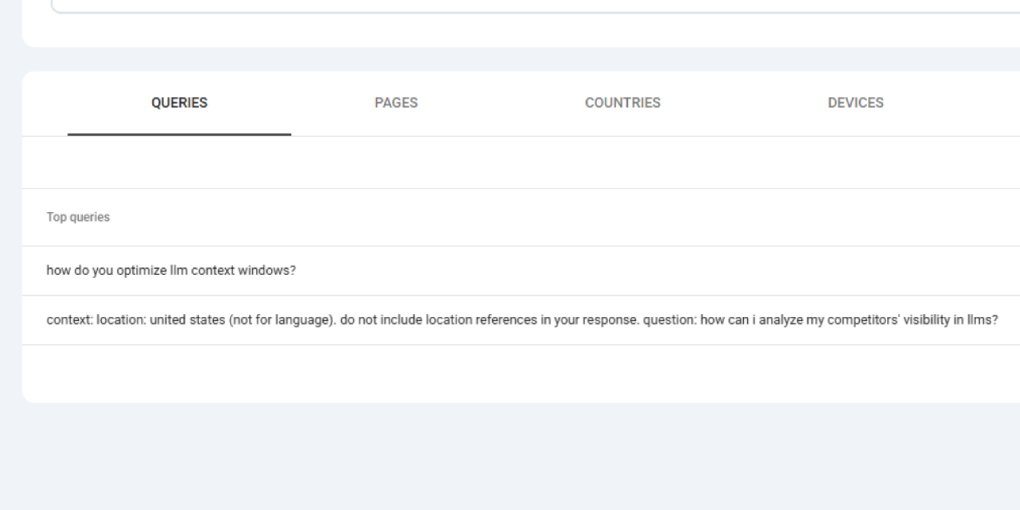
FAQ sections are trickier. If you’re adding an FAQ just because LLMs like the Q&A format, readers will notice the padding. The fix: only include questions people actually search for. Use Search Console data. If real users ask the question, both audiences benefit.
The only genuine tension is length. LLMs extract better from comprehensive pages because there’s more content to chunk. But readers prefer concise answers. The solution is structure: write comprehensive content but use headings and summaries so readers can skip to what matters.
A practical checklist
Before publishing, run through these five checks:
- Can someone understand the page by reading only the headings?
- Does the first paragraph clearly state what the page covers?
- Are there sentences a model could quote as standalone answers?
- Is there JSON-LD schema appropriate to the content type?
- Would you personally find this page useful if you landed on it from a search?
If you answer yes to all five, you’ve balanced both sides.
Measure the balance
Run your page through hey-eye and check the scores across all four pillars. A well-balanced page should score consistently, not spike on AI Extractability while tanking on Content Clarity or vice versa. Uneven pillar scores usually signal a tradeoff you didn’t intend.
The goal isn’t to choose a side. It’s to realize the sides were never that far apart.