You optimized your page. You added schema, fixed headings, shortened paragraphs, and watched your AI visibility score jump from 45 to 82. Done, right?
Not quite. Three weeks later, a CMS update removes your JSON-LD block. A content editor reformats your headings for visual consistency. A developer refactors the template and accidentally strips your breadcrumb markup. Your score drops back to 50 and you don’t notice for months.
Extractability isn’t static. It requires monitoring.
Why extractability changes over time
Content isn’t published and forgotten. It evolves:
Content edits. An editor updates a post, merges two sections into one, removes a subheading, and adds a 200-word paragraph. The content improves for humans but the heading density drops and paragraph length spikes. Extractability decreases without anyone realizing it.
Template changes. A developer updates the blog template to match a new design. The breadcrumb component gets removed. The schema block moves from the head to a JavaScript injection that AI crawlers can’t execute. Every page using that template regresses simultaneously.
CMS and plugin updates. WordPress plugin updates, CMS migrations, or platform changes can silently alter your HTML output. A schema plugin that generated Article markup might switch to a different format or stop working entirely after an update.
New content without standards. Your first ten posts followed strict formatting guidelines. Post number thirty was written in a rush and skipped the schema, used only one heading, and included a 300-word opening paragraph. Without monitoring, inconsistencies accumulate.
External changes. Google updates its structured data requirements. A new schema type becomes best practice. AI crawlers start evaluating signals they previously ignored. Your content didn’t change but the standards around it did.
What to monitor
Effective extractability monitoring tracks five dimensions:
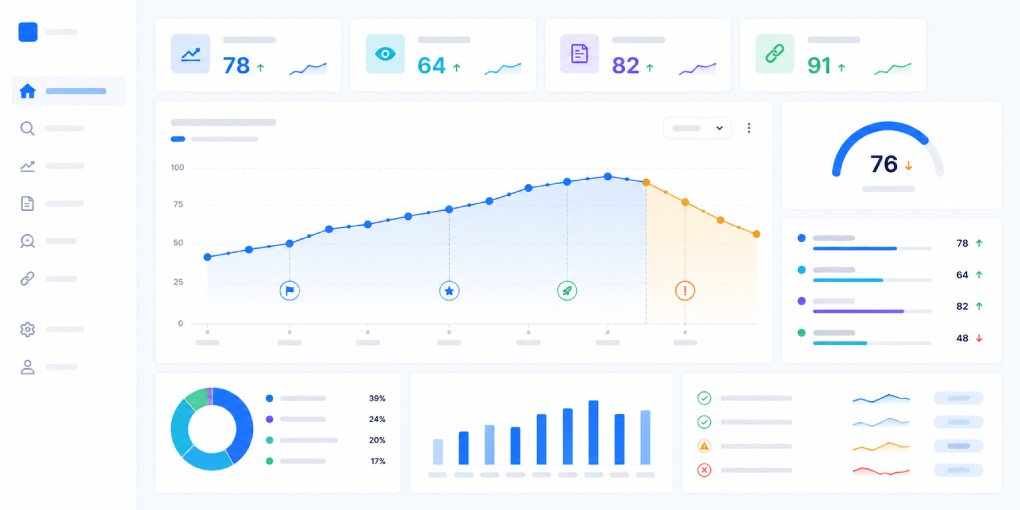
Overall score trend. Is your average score across all pages going up, staying flat, or declining? A steady decline suggests systematic issues. A sudden drop points to a specific event (template change, plugin update).
Per-pillar breakdown. A total score of 70 could mean 70 across all four pillars or 95 on three pillars and 20 on one. Track each pillar individually to catch targeted regressions. A drop in AI Extractability with stable Structural Integrity means your content structure changed, not your HTML.
Page-level outliers. Which pages score significantly below your site average? New pages that were published without schema, old pages that haven’t been updated, or high-traffic pages that regressed after edits. Outliers drag down your domain’s overall AI perception.
Schema presence. Is JSON-LD schema still present on every page that should have it? Schema disappears more often than you’d expect: template changes, plugin conflicts, and manual edits all risk removing it.
Crawl access. Is your robots.txt still allowing AI crawlers? Has a security update or CDN change blocked any bot user-agents? A single misconfigured line can make your entire site invisible to an AI platform.
Building a monitoring workflow
Weekly spot checks. Pick three pages each week and run them through hey-eye. Rotate through your most important pages so every key page gets checked at least monthly. Takes five minutes.
Post-edit scans. After any content edit, template change, or CMS update, immediately scan the affected pages. Don’t wait for the weekly check. Regressions are cheapest to fix when they’re caught immediately.
Monthly full audits. Run a complete website audit once a month. This catches issues across your entire site that spot checks might miss: new pages published without schema, old pages that drifted below your quality bar, and patterns of decline that only appear at scale.
Score history tracking. Use Scan History to track scores over time. A page that scored 85 three months ago and 72 today lost something along the way. The history shows when the drop happened, which helps you correlate it with specific changes.
Setting quality baselines
Define minimum acceptable scores for your content:
New content baseline. Every new blog post must score above 75 overall before publishing. If it’s below that, fix the structural issues before it goes live.
Existing content threshold. Any existing page that drops below 60 gets flagged for review. Determine whether the drop is from a content edit, template change, or external factor, and fix accordingly.
Pillar minimums. No pillar should score below 50 on any page. A page with 90 overall but 30 on Authority & Trust has a specific gap that needs attention.
These thresholds are examples. Set your own based on your current scores and competitive landscape. The point isn’t the specific numbers. It’s having numbers at all. Without baselines, regressions go unnoticed.
Automating the process
Manual monitoring works for small sites. As your content grows, consider automating:
Scheduled audits. Set a calendar reminder for monthly website audits. Block 30 minutes to review results and flag pages below your thresholds.
Post-deploy checks. If your site has a CI/CD pipeline, add a post-deploy step that scans key pages and alerts if scores drop below baseline. This catches template regressions at the moment they’re introduced.
GSC monitoring. Track your Google Search Console data weekly. A sudden drop in impressions for a previously performing page often indicates a structural regression. Cross-reference with your extractability scores to diagnose the cause.
Bing AI Performance. Monitor your AI citation count in Bing Webmaster Tools monthly. A decline in citations that doesn’t correlate with a traffic decline suggests an extractability problem: crawlers are still visiting but finding less citable content.
The monitoring mindset
Most teams treat optimization as a project: start, execute, finish. Extractability monitoring reframes it as a process: optimize, verify, maintain, repeat.
The sites that maintain high AI visibility aren’t the ones that optimized hardest once. They’re the ones that check consistently, catch regressions early, and fix them before they compound.
Start by running your top five pages through hey-eye today. Save the scores. Check again next month. The trend line will tell you whether your AI visibility is growing, stable, or quietly eroding.