An LLM can extract content from any page. The question is whether it will. Before a model cites your page in a response, it evaluates whether your site is a credible source. That evaluation is based on authority and trust signals, and most sites have no idea how they’re performing.
How LLMs assess trust
Search engines have used authority signals for decades: backlinks, domain age, brand mentions. LLMs use some of the same signals but weigh them differently and add new ones.
Traditional search ranks pages against each other on a results page. LLMs make a binary decision: is this source trustworthy enough to cite, or should I paraphrase without attribution? The threshold is different from ranking. A page can rank #3 in Google but never get cited by an LLM because it lacks the trust signals the model needs to justify attribution.
The signals that matter
In hey-eye’s scoring system, Authority & Trust is weighted at 20% of the total score. It evaluates specific signals that LLMs use to assess source credibility:
Author attribution. Is there a visible author name on the page? Can the model identify who wrote the content? Anonymous content gets extracted less frequently because the model can’t verify expertise. A byline with a name, even without a full bio, significantly increases citation likelihood.
About page link. Does your site have an accessible About page, and does your content link to it? An About page tells models who operates the site and what their expertise is. It’s the organizational equivalent of author attribution.
Contact page link. A visible Contact page signals that a real organization stands behind the content. Sites without contact information appear less legitimate to both humans and AI systems.
Social profile links. LinkedIn, Twitter, Facebook, or other professional profiles linked from your site give models a way to verify that the author or organization exists beyond the website. These signals contribute to entity recognition, which helps models connect your content to a known entity.
Image alt text. While primarily an accessibility feature, alt text also signals content quality and attention to detail. Sites that skip alt text on images tend to skip other quality signals too. Models use this as a proxy for overall content care.
Meta robots directives. A page with “index, follow” is explicitly welcoming crawlers. Pages with “noindex” or “nofollow” send mixed signals about whether the content is meant to be discovered.
HTTPS. Secure connections are a baseline trust signal. HTTP sites without SSL certificates are penalized by both search engines and LLMs.
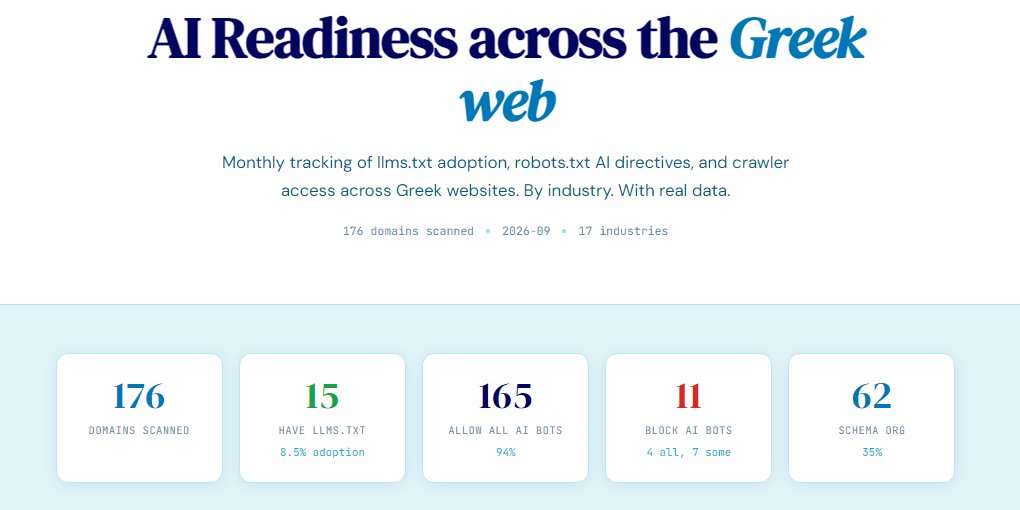
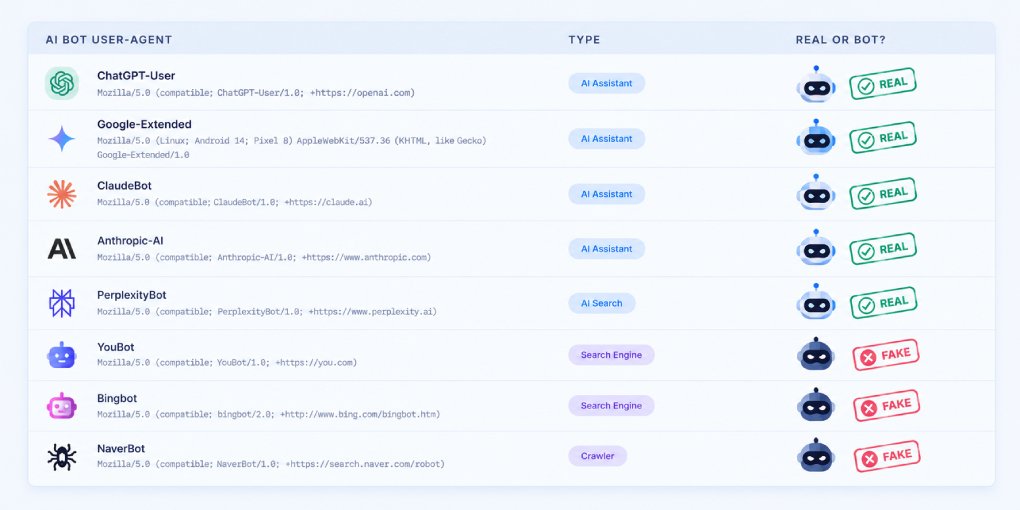
AI bot access in robots.txt. If your robots.txt blocks GPTBot, ClaudeBot, or other AI crawlers, you’re explicitly telling those systems not to access your content. Even if they could technically ignore the directive, well-behaved AI crawlers respect it. Use the hey-eye robots.txt generator to configure this correctly.
llms.txt file. An llms.txt file at your domain root tells AI systems what your site offers and where to find key content. Its presence signals that you’ve actively prepared for AI interaction, which is a trust marker in itself. And Google now checks for it.
Why 20% weight matters
Authority & Trust at 20% weight might seem low compared to AI Extractability at 35% or Structural Integrity at 30%. But trust works as a multiplier, not an additive score.
A page with perfect structure and extractability but zero trust signals might score well overall, but models treat trust as a gating factor. Below a certain threshold, the model deprioritizes the source regardless of how well-structured the content is. You can have the most extractable page on the internet, but if the model doesn’t trust the source, it’ll cite a less-structured page from a more trusted domain.
This is why brand-new sites with technically perfect optimization sometimes underperform established sites with mediocre structure. Trust takes time to build.
Quick wins for trust
Most trust fixes are simple additions, not rewrites:
Add an author byline to every page. Name, role, and optionally a one-line bio. Link to a LinkedIn profile if possible. This can be as simple as “By [Name], [Role] at [Company]” at the top or bottom of each article.
Create or update your About page. Include who you are, what your expertise is, and why you’re qualified to write about your topics. Link to it from your main navigation.
Add social profile links. Footer links to LinkedIn, Twitter, and any other professional profiles. These should be real, active profiles, not placeholder links.
Check your robots.txt. Run your site through hey-eye and check specifically whether AI bots are allowed. One misconfigured line can block all AI citation.
Deploy an llms.txt file. Use the hey-eye llms.txt generator to create one in minutes.
The long game
Some trust signals can’t be shortcut. Domain authority builds over time through consistent publishing, earning backlinks, and being referenced by other authoritative sources. Author reputation grows as your name appears across multiple credible platforms.
But the foundational signals, the ones hey-eye checks, can be implemented today. They won’t make you an authority overnight, but they remove the barriers that prevent models from citing content that’s already good enough to be cited.
Check your current Authority & Trust score at hey-eye.gr. The pillar breakdown shows exactly which signals are present and which are missing. Fix the missing ones first.