AI agents are no longer a future scenario. Shopping agents compare prices across websites. Research agents pull data from multiple sources to compile reports. Travel agents browse hotel sites, check availability, and make bookings. These aren’t humans using AI tools. They’re autonomous programs navigating your website the way a human would, except faster, less forgiving, and with zero tolerance for friction.
If your website isn’t ready for AI agents, you’re invisible to a growing segment of users who never visit your site themselves. They send an agent instead.
What AI agents need from your website
AI agents and LLMs share some requirements, but agents have additional needs because they don’t just read content. They interact with it. They click, they navigate, they fill forms, they extract data to compare with other sites.
Machine-readable content. This is the baseline. If an LLM can’t extract your content, an agent can’t work with it either. Clean HTML, structured data, clear headings, and semantic markup are prerequisites.
Predictable navigation. Agents follow links programmatically. A mega menu built entirely in JavaScript that requires hover events to reveal options is a dead end for most agents. Navigation that exists in the HTML, with descriptive anchor text, is navigable.
Structured product and service data. If you sell products, agents need structured data to compare: price, availability, specifications, reviews. JSON-LD Product schema isn’t optional anymore. It’s how agents read your catalog without scraping your UI.
Fast, clean responses. Agents make many requests in quick succession. If your site is slow, rate-limits aggressively, or returns different content based on user-agent strings, agents will skip you and move to a competitor that responds consistently.
Accessible APIs or feeds. The most agent-friendly sites offer structured data endpoints: product feeds, availability APIs, or at minimum a well-formed sitemap that maps every relevant page.
The AI agent readiness checklist
Run through these checks to assess where your site stands:
If you prefer to run the checks yourself right now, these six hands-on tests take about ten minutes in your browser.
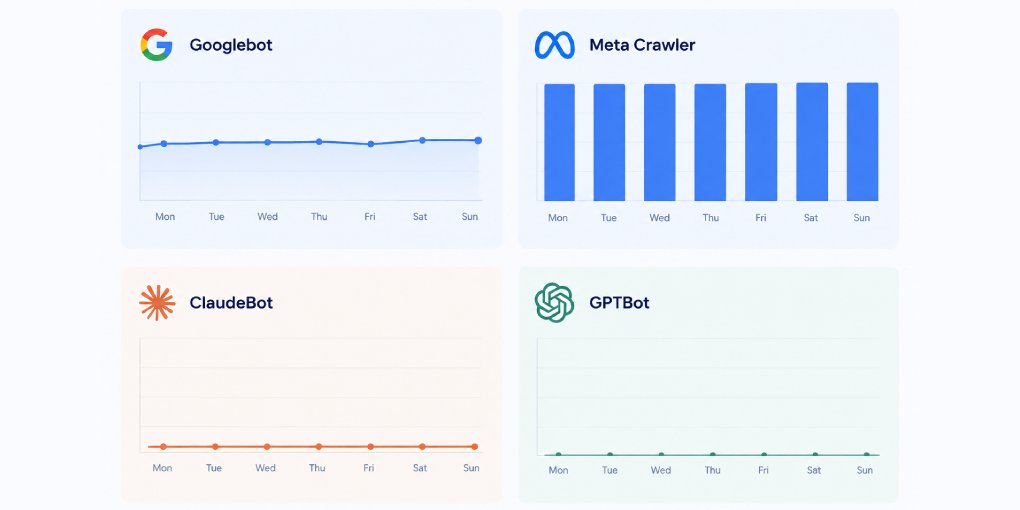
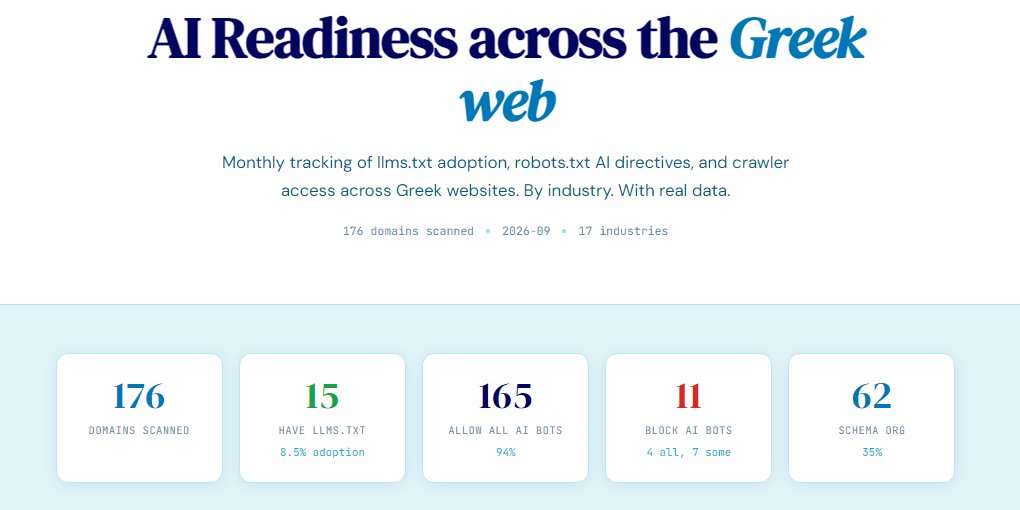
1. Can a bot access your content? Check your robots.txt. Are AI crawlers (GPTBot, ClaudeBot, Anthropic-AI, Google-Extended) allowed or blocked? If you’re blocking them, agents from those platforms can’t access your site at all. You can generate a properly configured robots.txt with the hey-eye robots.txt generator.
2. Does your site have an llms.txt file? The llms.txt standard is an emerging way to tell AI systems what your site is about, what content is available, and how to interact with it. Think of it as a sitemap specifically designed for AI. Generate one with the hey-eye llms.txt generator.
3. Is your structured data complete? Run your key pages through a schema validator. Every product page should have Product schema. Every article should have Article schema. Every FAQ should have FAQPage schema. Agents use this data as their primary information source before falling back to parsing HTML.
4. Are your pages accessible without JavaScript? Many agents don’t execute JavaScript. If your content, prices, or product details only appear after JavaScript runs, agents see an empty page. View your site with JavaScript disabled. Whatever you see is what most agents see.
5. Do your pages load fast? Agents have timeout thresholds. If your page takes more than a few seconds to respond, the agent moves on. Core Web Vitals aren’t just a Google ranking factor. They’re an agent compatibility requirement.
6. Is your site structure crawlable? Can an agent start at your homepage and reach every important page through links? Orphan pages, JavaScript-only navigation, and deep nesting create blind spots. A clean sitemap helps, but nothing replaces a well-linked site structure.
Measuring your baseline with hey-eye
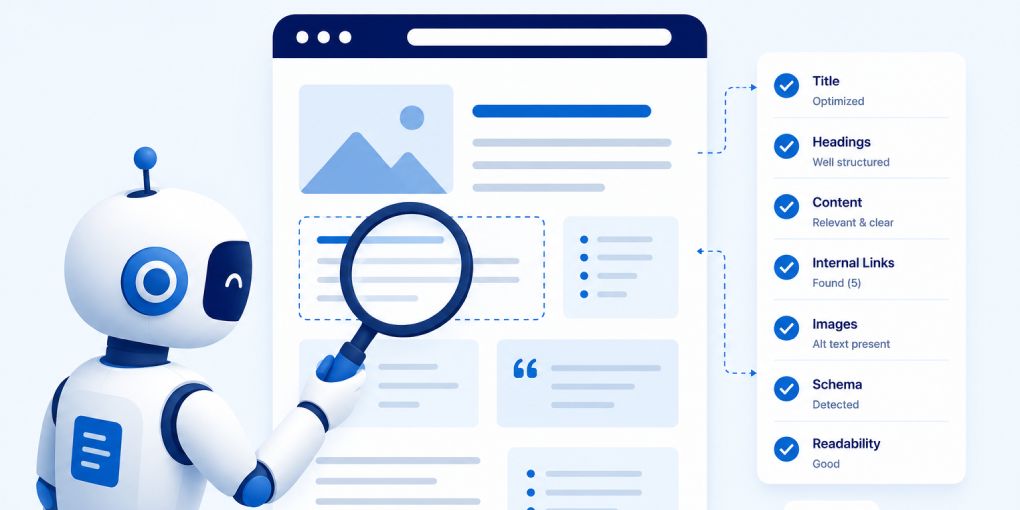
Run your homepage and key landing pages through hey-eye. Beyond the four-pillar visibility score, hey-eye includes a dedicated AI Agent Readiness panel that checks for the specific discovery files and protocols agents look for:
MCP Server Card (/.well-known/mcp.json) - A JSON file that tells AI agents what capabilities your site exposes through the Model Context Protocol. Without it, MCP-compatible agents don’t know your site offers any interactive functionality.
Agent Skills Index (/.well-known/agent-skills/index.json) - A structured manifest of actions agents can perform on your site: search products, check availability, submit forms. This is how agents discover what they can do beyond just reading content.
WebMCP (/.well-known/webmcp.json) - A discovery file for the WebMCP protocol that enables browser-based agents to interact with your site programmatically.
Auth.md (/auth.md) - A markdown file that explains to agents how authentication works on your site. If your content or APIs require login, agents need this to understand how to authenticate.
Markdown Negotiation - Whether your server can return content as clean markdown when an agent sends an Accept: text/markdown header. This gives agents structured text instead of raw HTML to parse.
Link Headers - HTTP Link headers that point agents to related resources, alternative representations, or API endpoints.
Each check includes a “Fix with AI” button that generates a ready-to-use prompt explaining what the file is, what it should contain, and how to implement it for your specific site. You don’t need to research each standard separately.
The four-pillar score gives you the content and structural foundations:
Structural Integrity tells you whether your HTML is clean enough for agents to parse. AI Extractability shows whether your content and data are structured for machine consumption. Content Clarity indicates whether your content is organized in digestible, navigable sections. Authority & Trust reveals whether your site has the signals agents use to verify legitimacy.
A site that scores well across all four pillars is fundamentally agent-ready. The structural foundations for LLM visibility and agent accessibility are the same.
The gap between readable and actionable
There’s an important distinction between a site that agents can read and a site that agents can act on. Reading means extracting information: prices, descriptions, specifications. Acting means completing tasks: adding to cart, submitting a form, making a reservation.
Most sites today are partially readable but almost never actionable by agents. Full agent readiness requires thinking about your site as an interface for both humans and machines. That starts with the basics: clean structure, structured data, accessible content, fast responses.
Start with visibility, build toward interaction
You don’t need to rebuild your site for AI agents overnight. The path is incremental. Start with the foundations: make sure your content is extractable, your data is structured, and your crawl paths are clear. These improvements benefit your traditional SEO, your LLM visibility, and your agent readiness simultaneously.
Check your current status with a free analysis, fix the structural gaps first, and you’ll be ahead of the vast majority of websites that haven’t started thinking about agents at all.